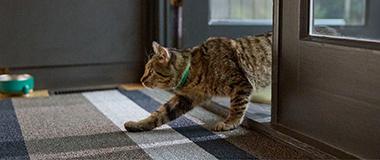

Ear Mites in Cats - Symptoms and Treatment

Reviewed by Dr Gavin Harper BVMS

While they are not life-threatening, ear mites in cats can cause a great deal of irritation and discomfort. This article will discuss the symptoms of ear mites in cats, how they can be treated and how to protect your cat.

ear mites in cats
ear mites in cats

What are ear mites in cats?

Ear mites are tiny parasites that inhabit the ear canals and surrounding skin of cats and dogs. They prefer to live on the surface of the skin rather than burrowing further inside the skin like some other mites. Ear mites are a common cause of ear disease in cats, especially in kittens.

How do cats get ear mites?

Ear mites are mainly spread by close contact with another animal, such as a dog or cat, who already has ear mites. Cats that frequently interact with other pets in the same household, at parks, shelters, or grooming facilities may have a higher risk of exposure to mites.

What do ear mites look like in cats?

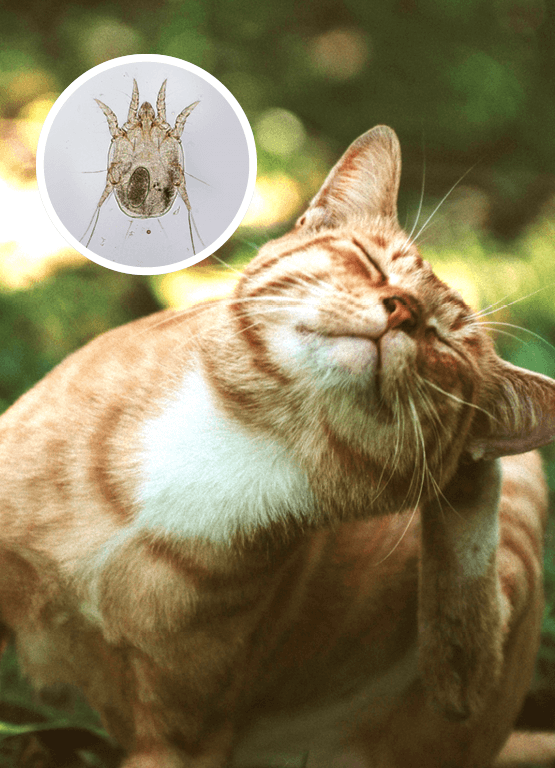
You may be wondering what do ear mites look like? Ear mites are actually so small that it’s unlikely you will be able to see them with the naked eye. Your veterinarian can use an otoscope or microscope to diagnose an infestation. It’s best to look out for the signs of ear mites in cats rather than the mites themselves.

Symptoms of ear mites in cats

Body Copy

There are many signs of ear mites in cats. Cats with ear mites may exhibit one or more of the following symptoms:

  • Scratching around the ears, head, and neck
  • A dark and waxy discharge in the ears
  • Skin irritation in and around the ears
  • Head shaking
  • An unpleasant odour from the ears

There are other potential causes of these symptoms, such as a yeast infection, a bacterial infection, or allergic skin disease. Your vet can examine your cat to rule out some of the other potential causes by looking at a sample of your cat’s ear wax under the microscope.
mites - portrait mites - portrait

How do vets diagnose ear mites in cats?

To diagnose ear mites in cats a veterinarian may perform the following steps:

  • A thorough physical check paying close attention to the cat’s ears using a special instrument called an otoscope.

  • Use a cotton swab to gently remove material from the ear. If it looks like coffee grounds, it’s likely the cat has ear mites.

  • View the material under a microscope.

  • Place material from the swab onto a slide then stain it and look at it under a microscope to check for secondary bacterial infections in the ear canal which can be common in cats with ear mites.

Body Copy

How to treat ear mites in cats
So how can you get rid of ear mites in cats? 

  • Confirm the diagnosis: consult with a vet if you suspect that your cat has ear mites. Other ear conditions can produce similar symptoms so it’s important to have your cat checked by a vet if they are showing symptoms or ear mites.
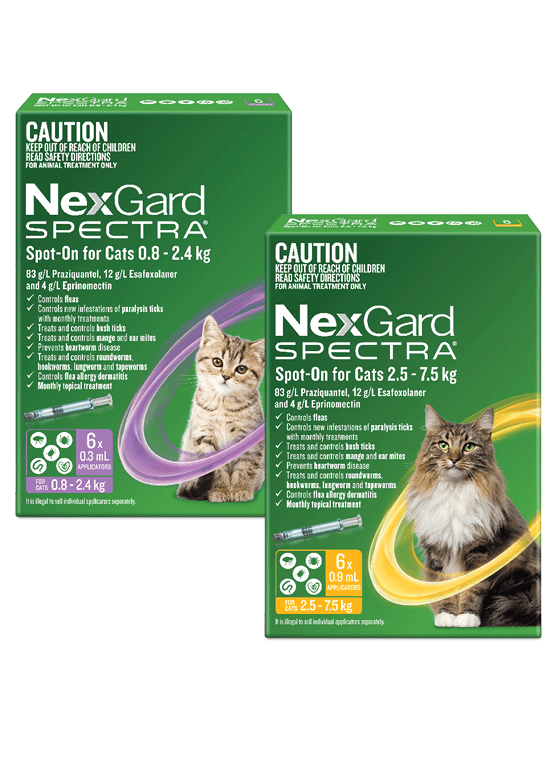
  • Once ear mites have been confirmed by the vet, they will recommend treatment with an approved treatment such as NexGard SPECTRA Spot-On for cats
  • A single dose of NexGard SPECTRA Spot-On for cats is highly effective at treating ear mites in cats.
  • NexGard SPECTRA can be used on cats from 8 weeks of age and weighing at least 0.8 kg.
  • If the ear irritation persists, it’s best to consult with your vet.

As ear mites are highly contagious, all pets in the household should be checked by a veterinarian.

Nexgard spectra for cats - portrait Nexgard spectra for cats - portrait

How effective is NexGard SPECTRA against ear mites in cats?

A single dose of NexGard SPECTRA Spot-on for Cats is highly effective against ear mite infestations.

Is NexGard SPECTRA safe for cats and kittens?

  • NexGard SPECTRA has been shown to be safe in various breeds of cats and kittens 8 weeks of age and older, and in breeding, pregnant or lactating queens.
  • Suitable for cats from 8 weeks of age and weighing at least 0.8 kg.
  • Includes an easy-to-use applicator designed to reduce stress and mess during application for cats and their owners.
  • Features a low odour formula, with 98% of cat parents* in a trial reporting low or no odour.
  • Safe in heartworm positive cats.

*mouthsofmums.com.au review webpage accessed on 25 March 2025.

Is NexGard SPECTRA recommended by vets?

NexGard SPECTRA Spot-on for Cats is available at veterinary clinics and pet stores nationwide. The most suitable parasite protection option can depend on your cat’s age, health, lifestyle and individual needs. Speak with your veterinarian about whether NexGard SPECTRA is the right parasite protection option for your cat.

How to prevent ear mites in cats

Monthly treatment with NexGard SPECTRA® protects cats against ear mites and mange, as well as fleas, ticks, heartworm, lungworm and intestinal worms (including tapeworms). It provides the most complete parasite protection, all in one easy, monthly application.

What happens if ear mites are left untreated?

If left untreated, ear mites in cats can cause intense itching, inflammation and irritation. Ear mites in cats can also lead to secondary bacterial ear infections in the ear canal.

FAQs

  • Are cat ear mites contagious to humans?

    Ear mites can be transmitted between cats and dogs but they are not contagious to humans.

  • How do you know if your cat has ear mites?

    If your cat has ear irritation, they may have ear mites. However, there are several potential causes of ear irritation in cats. If your cat has a problem with one or both ears, you should consult your vet so they can examine your cat to identify the cause.

  • What do ear mites look like in a cat's ear?

    The ear mites themselves are too small to see but you might notice a dark and waxy discharge in your cat’s ears.


  • How long does it take to get rid of ear mites in cats?

    A single dose of NexGard SPECTRA® is highly effective at treating ear mites in cats. If the ear irritation persists, it’s best to consult with your vet as there may be another issue that needs to be addressed (such as a secondary ear infection).

  • How do you check for ear mites in cats at home?

    Common signs of ear mites in cats you can look for at home include scratching their ears, a dark and waxy discharge in the ears, skin irritation in and around their ears, head shaking or an unpleasant odour from their ears. However, these symptoms should be checked by a veterinarian to confirm if ear mites are present.

RELATED ARTICLES

View more
hand-holding-phone
hand-holding-phone

Have reminders sent directly to your phone

Copyright and Trademark Notice

NEXGARD SPECTRA®, NEXGARD®, HEARTGARD30® and PARAGARD® are registered trademarks of the Boehringer Ingelheim Group. 
©2026 Boehringer Ingelheim Animal Health Australia Pty. Ltd. All rights reserved. PET-0445-2025

See product label for full claim details and directions for use.