


What do dog ticks look like?
A tick is a small, blood-sucking parasite. Unlike fleas, ticks stay attached for long periods while feeding on blood. Adult ticks have eight legs and engorge significantly as they ingest blood. On dogs, ticks often resemble small bumps on the skin. On closer inspection the tick’s legs can be seen.
What causes ticks on dogs?
You may be wondering how dogs get ticks in the first place. Here are some of the causes of ticks on dogs:
Tick habitats
Ticks thrive in warm, humid environments. Long grasses, bushes, leaf litter and wooded areas are common tick hotspots. Even suburban gardens can harbour ticks if conditions are right. Dogs walking or playing in these areas easily brush against tick-infested vegetation. Native wildlife such as possums, bandicoots, rodents and birds often carry ticks. When these animals pass through your backyard or local parks, they may drop ticks into the environment, increasing your dog's exposure risk.
Tick questing
Ticks use a behaviour called questing to find hosts. They climb to the edge of leaves or blades of grass, extend their legs, and wait for a passing animal. As your dog walks by, ticks latch on and begin searching for a place to attach.
Attachment
Once a tick finds a suitable feeding spot, it pierces the dog’s skin with its mouthparts and begins feeding. Ticks can remain attached for several days, becoming larger as they consume blood.
Why are ticks on dogs a problem?
Ticks aren’t just unpleasant — they can cause serious health issues:
• Irritation and inflammation: Tick bites often cause redness, swelling, and discomfort at the site where the tick attaches.
• Tick paralysis: Paralysis ticks release neurotoxins that cause a life-threatening condition called tick paralysis.
• Disease transmission: Some species of ticks can spread diseases such as ehrlichiosis or babesiosis.
• Anaemia: Heavy infestations may lead to blood loss, particularly in puppies or smaller dogs.
How to prevent ticks on dogs
Using a vet-recommended tick control product such as NexGard SPECTRA® all year-round is the best way to protect your dog. Daily searching and removal of ticks is also recommended for all dogs that live in, or travel to, a known paralysis tick region. Reduce exposure to ticks by clearing leaves and debris in the yard and mowing lawns.
FAQs
-
What is the main cause of ticks on dogs?
The primary cause of ticks on dogs is exposure to environments where ticks live and quest for hosts, such as grassy areas and bushland.
-
What attracts ticks to dogs?
Ticks are drawn to body heat, movement and the scent of carbon dioxide that dogs naturally produce, which signals a nearby host.
-
How does a tick get onto a dog?
Ticks attach by waiting on vegetation and latching onto a dog’s fur as it brushes past. Once on the dog, the tick moves to a preferred feeding site to attach and start feeding on blood.
Related Articles


Ticks are more than just a nuisance; they can cause a range of health issues for your pet, from mild irritation to life-threatening paralysis. But how can you tell if your dog has a tick? Recognising the symptoms of ticks in dogs early is essential for prompt treatment and preventing complications. The symptoms can vary based on the type of tick and how long it has been attached.
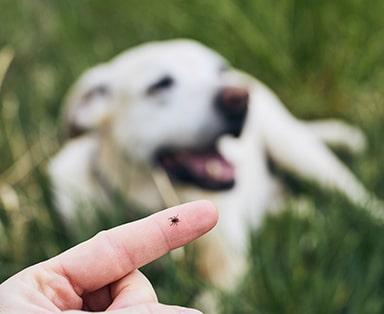
Ticks can cause serious and potentially fatal diseases in dogs. Take a look at everything you need to know, such as how to find ticks, how to remove a tick, and how to protect your dog.


Looking to learn what ticks look like and how to spot them? Discover how to find them and get rid of them on your dog.

Looking to learn how to remove ticks on dogs? Learn how to get rid of ticks on dogs including how to find a tick and using tick removal tools today.
Is your dog protected against brown dog ticks? Learn more about symptoms, prevention and treatment.

Want to know how to spot ticks on your dog? Find out the signs and symptoms of ticks and how NexGard® and NexGard SPECTRA® can help to protect your dog.

Is your dog protected against bush ticks? Find out more about the symptoms, prevention and treatment of bush ticks.

A paralysis tick on your dog can cause serious harm. Learn about what paralysis ticks look like, what to do if you find a tick and how to protect your dog.