

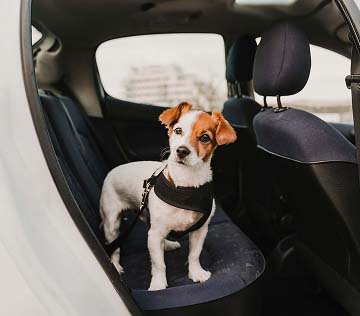
Symptoms of Dog Car Sickness
If your furry friend has a little distress every time they’re on the road, knowing the signs can help you address the issue early and make your pet’s journey more comfortable. These include:
• Dog Vomiting: One of the clearest indicators of motion sickness in dogs. Repeated vomiting during trips can distress your pet during car rides.
• Dog Nausea: Look for signs like excessive drooling, licking lips, or refusing food before or during travel.
• Restlessness: Your dog might whine, pace, or seem anxious.
• Excessive Yawning
If your dog gets car sick frequently, these symptoms might worsen, so it’s important to find solutions to ease their discomfort.
Causes of Dog Car Sickness
There are several reasons why a dog gets car sick. Some are physical, while others are emotional. Let’s break down the common causes:
1. Physical Factors
Dog travel sickness is often linked to the inner ear, which helps with balance. Puppies are more likely to experience car sickness because their ear structures are still developing. For some dogs, the car's motion disrupts their equilibrium, leading to nausea.
2. Emotional Factors
Dog travel anxiety is another major cause. If your dog associates car rides with negative experiences, such as trips to the vet, they might feel anxious as soon as they get in the car. A dog may get anxious in the car when they’re unsure of what to expect or if they don’t feel secure. By identifying whether physical or emotional factors cause your dog’s sickness, you can determine the best course of action to address it.
Treatment of Dog Car Sickness
Treating dog car sickness often involves a combination of medical solutions and behavioural strategies. Here are some of the most effective treatments:
Anti-Nausea Medication for Dogs
If your pet’s dog travel sickness is severe, your veterinarian may prescribe anti-nausea medication for dogs, particularly for long trips. These medications help settle their stomach during car rides, reducing vomiting and nausea.
Behavioural Training
Helping your dog feel comfortable in the car is essential. Start with short trips that lead to positive experiences, like a visit to the park. Gradually increase the duration of the rides as your dog becomes more accustomed to car travel.
Preventing Car Sickness in Dogs
Preventing dog travel sickness is easier when you plan ahead and create a calm, comfortable environment for your pet.
Here are some practical tips:
1. Keep Your Dog Cool
Heat can exacerbate motion sickness. Ensure your car is well-ventilated or use cooling products to help your dog stay comfortable. For more tips, check out our guide on how to cool down a dog.
2. Use a Dog Safety Harness
A dog safety harness keeps your dog secure and minimises movement, which can help reduce motion sickness. It’s a simple way to keep your dog safe and comfortable during car rides.
3. Bring Familiar Toys
Having familiar dog toys in the car can distract and comfort your pup. Chewing or playing with a favourite toy can help alleviate anxiety and make the ride more enjoyable.
FAQ
-
How Long Does Car Sickness Last in Dogs?
Car sickness can be temporary. Puppies often outgrow dog car sickness as their inner ear develops, usually by the time they’re a year old. For adult dogs, symptoms might persist if they’re related to anxiety or learned behaviour. Consistent management and training can significantly reduce symptoms over time.
-
What Natural Remedy Can I Give My Dog for Car Sickness?
It's best to consult with your vet about the most appropriate treatments or remedies to manage car sickness in dogs.
-
Can a Dog Be Cured of Car Sickness?
Yes, in many cases! Puppies often outgrow dog travel sickness, while adult dogs can improve with consistent training or medication. Behavioural desensitisation—such as taking short, positive car rides—can help eliminate the association of car rides with discomfort or stress.
Related Articles
Wondering what do mites look like on dogs? Learn what mites look like on dogs in our complete guide on dog mites and mange.

How do you know if your dog is anxious and want to know how to prevent it? Learn more about signs, symptoms and prevention of dog anxiety.

Looking to adopt a pet dog? Read our guide on adopting a dog and check out our tips on what to consider when adopting a dog.
Copyright and Trademark Notice
NEXGARD SPECTRA®, NEXGARD®, HEARTGARD30® and PARAGARD® are registered trademarks of the Boehringer Ingelheim Group.
©2026 Boehringer Ingelheim Animal Health Australia Pty. Ltd. All rights reserved. PET-0445-2025
See product label for full claim details and directions for use.