


What are tapeworms?
Tapeworms are a type of intestinal parasite. Humans have their own species of tapeworms, but some tapeworms of dogs can also cause disease in people. Several different species of tapeworms can affect dogs in Australia, although the prevalence is very low in the general dog population. Two species of tapeworms that can affect dogs in Australia are:
- Flea tapeworm (Dipylidium caninum): Transmitted by fleas and is one of the most common tapeworms that can affect dogs in Australia.
- Hydatid tapeworm (Echinococcus granulosus): Transmitted when dogs eat raw meat or offal of an infected grazing animal (e.g., a sheep or kangaroo) which has not been subjected to abattoir inspection or been appropriately processed. This might be a risk for some dogs, particularly in rural areas, however, for a typical suburban pet dog, the risk of infestation with hydatid tapeworm is zero. Commercially available raw pet food diets are subject to strict processing requirements and are not considered a risk for this parasite.
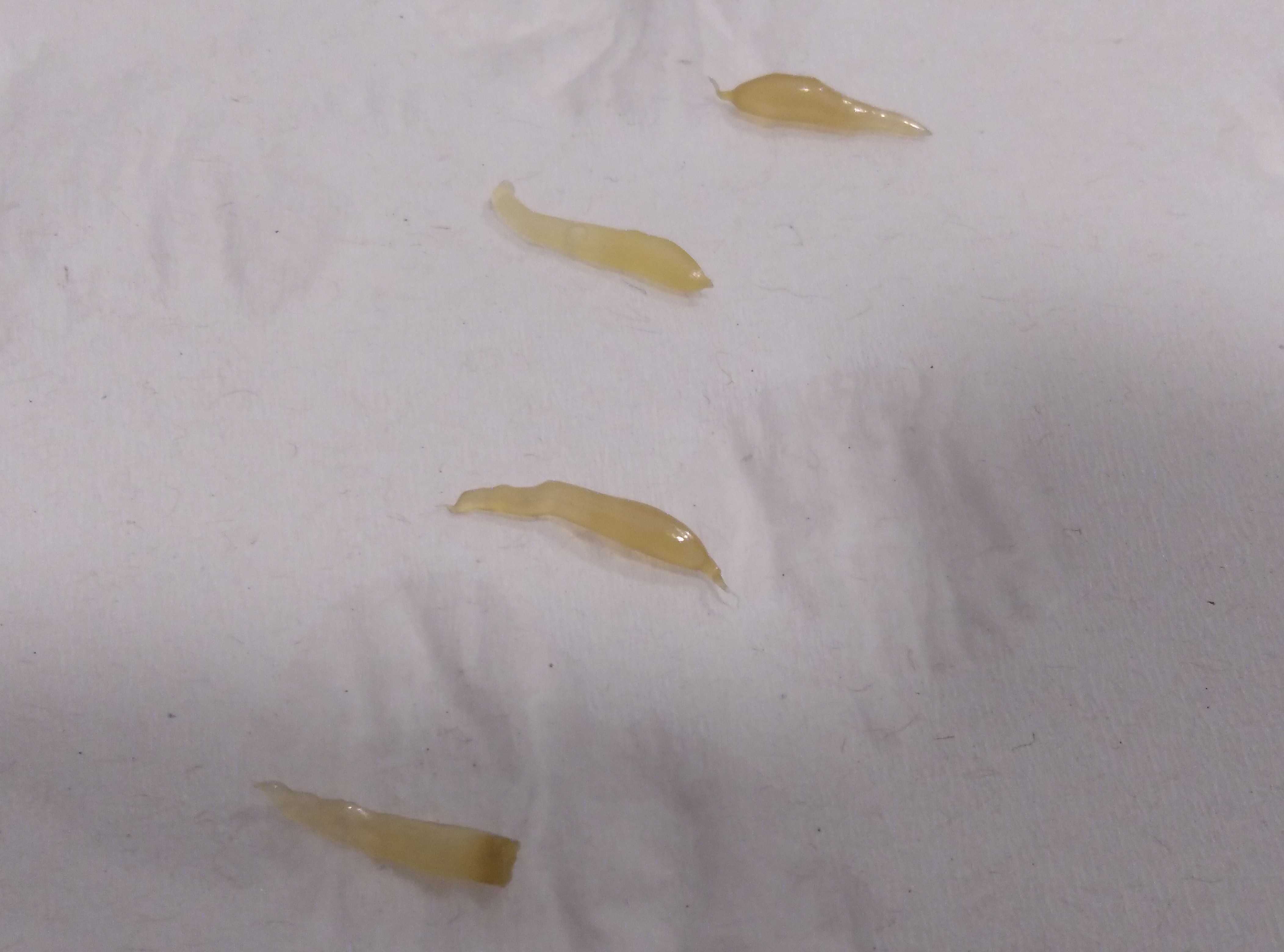
Pictures of Tapeworms
This picture shows flea tapeworm segments which can sometimes be seen on the stool of infected puppies or around the anus.
What age can a puppy get tapeworms?
Puppies can get tapeworms from an early age. Infection occurs when the puppy is exposed to the intermediate host of the tapeworm. For example, puppies can then become infested with flea tapeworm after ingesting an adult flea containing flea tapeworm larvae.
How serious is tapeworms in puppies?
Tapeworms in puppies do not typically cause significant illness and often there are no obvious signs that a puppy or dog has the parasite. However, some canine tapeworms can infect people and so it is important to protect dogs – see the section below on tapeworm prevention for more information.
Tapeworms in puppies symptoms
Often there are no obvious signs or symptoms. Sometimes, puppies and dogs infected with flea tapeworms may experience an itchy bottom, leading them to rub or scoot on the ground. Scooting can also be related to other issues such as anal gland problems, so consulting with your vet is recommended. Sometimes, it’s possible to see segments of flea tapeworm in puppy stool – these segments resemble small, white grains of rice.
Tapeworm medication for puppies
When looking for the best tapeworm medicine for puppies, it’s important to know that treatment of an existing infestation requires giving a product that contains the active ingredient praziquantel, such as ParaGard® Allwormer. Puppies and dogs at risk of hydatid tapeworm (e.g., access to raw offal or carcasses) should be treated every 6 weeks.
Tapeworm prevention for puppies
Tapeworm infestations can be prevented in puppies and dogs by preventing exposure to the intermediate host of the tapeworm:
- Flea tapeworm: Rapid, effective flea control with NexGard® for Dogs or NexGard SPECTRA® for Dogs will prevent flea tapeworm infestations. To control existing flea tapeworm infestations, use ParaGard® for Dogs.
- Hydatid tapeworm: 100% preventable if puppies and dogs are restricted from eating raw meat or offal which has not been subjected to abattoir inspection or been appropriately processed. Commercially available raw pet food diets are subject to strict processing requirements and are not considered a risk for this parasite. Hydatid tapeworm can cause significant illness in people, so speak with your vet if you think your dog may be at risk. For dogs at risk, deworming every six weeks with a praziquantel-containing product such as ParaGard® for Dogs is recommended.
FAQs
-
Are tapeworms common in puppies?
Tapeworm infestations are not common in puppies in Australia. Rapid, effective flea control with NexGard® for Dogs or NexGard SPECTRA® for Dogs will prevent flea tapeworm infestations. To prevent hydatid tapeworm, it is important to restrict puppies and dogs from eating raw offal or from scavenging on carcasses. Treatment of a tapeworm infestation requires giving a product that contains the active ingredient praziquantel, such as ParaGard® for Dogs.
-
What can I do if my puppy has tapeworms?
Treatment of a tapeworm infestation requires giving a product that contains the active ingredient praziquantel, such as ParaGard® for Dogs.
-
Can puppy tapeworms affect humans?
Humans have their own species of tapeworms, but some tapeworms of dogs can also cause disease in people. For example, people can become infested with flea tapeworm if they accidentally swallow a flea carrying the parasite. People can also become infested with hydatid tapeworm if they accidentally ingest eggs passed in the faeces of an infested dog.
Related Articles


Intestinal worms such as roundworm, hookworm, whipworm and tapeworm can infect your puppy and cause illness. Read on to learn more about worms in puppies and how to protect against them.


Puppies and dogs of all ages are at risk of heartworm which can result in fatal disease. Learn more about heartworm and how you can protect your puppy.

Learn about important parasites in puppies and how to protect against them.


Copyright and Trademark Notice
NEXGARD SPECTRA®, NEXGARD®, HEARTGARD30® and PARAGARD® are registered trademarks of the Boehringer Ingelheim Group.
©2026 Boehringer Ingelheim Animal Health Australia Pty. Ltd. All rights reserved. PET-0445-2025
See product label for full claim details and directions for use.