

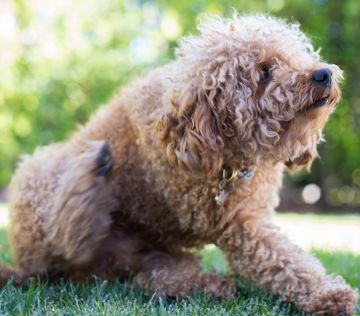
Signs of fleas on dogs
Fleas are masters of stealth. They’re quick, tiny, and excellent at hiding in your dog’s fur. But while you may not spot them right away, they can leave behind some pretty obvious clues. Below are some of the most common and telling signs of fleas on a dog.
Itchiness and scratching
Itchiness resulting in scratching or chewing of the skin, especially around the neck, tail base, and belly is a common sign of a flea infestation. Flea bites irritate the skin and cause constant discomfort, even more so if your dog is allergic to flea saliva.
Hair loss
Hair loss and sometimes bald patches may appear when a dog scratches or chews an area excessively. These are typically seen near the hind legs and lower back, where fleas congregate and cause irritation.
Irritated skin
Flea infestations can result in redness of the skin with crusts or scabs. Secondary bacterial infections of the skin can occur. Some dogs are allergic to flea saliva which causes a condition called flea allergy dermatitis which can be severe.
Flea dirt
Flea faeces, commonly called flea dirt, looks like small black specks, similar to pepper. To check, place some on a wet paper towel. If it turns reddish-brown, it’s flea faeces. If you’re wondering how to tell if a dog has fleas, this test can be useful.
Pale gums
Fleas feed on blood and with very heavy infestations, especially in puppies or small breeds, they can cause enough blood loss to result in anaemia. This would cause signs such as pale gums and lethargy. It’s important to seek veterinary advice immediately if you suspect anaemia.
Flea treatment for dogs
When it comes to fleas, prevention is definitely better than cure. Remember, by the time you see fleas on your dog, chances are they have already started laying eggs to infest your home! If you spot signs of fleas, acting quickly is essential. It’s important to use a highly effective flea treatment like NexGard SPECTRA for Dogs. It kills fleas within 6 - 8 hours and provides continuous protection for a full month.
General recommendations to help to manage and prevent flea infestations:
• Use an effective flea control product for all dogs and cats in the household all year round.
• Discard all flea infested items (e.g. bedding) where practical.
• Vacuum regularly; steam clean where possible. This will assist with removal of eggs and stimulate fleas to emerge from any pupae present in the environment.
• Clean between floorboards and in cracks between tiles and pavers.
• Wash pet bedding and blankets regularly in water above 60°C for at least 10 minutes.
• Place any household items that come into contact with pets and cannot be washed (e.g. rugs, cushions, door mats) in direct sunlight for as long as possible, as this may assist with killing flea eggs and larvae.
FAQ
-
What is considered a lot of fleas on a dog?
Even a small number of fleas can cause discomfort and skin disease, especially in a dog with flea allergy dermatitis. If any fleas are seen it’s important to treat quickly or ideally treat all year round to prevent an infestation.
-
What can be mistaken for fleas on dogs?
There are many causes of skin itchiness or irritation in dogs, including allergic skin disease or parasites such as fleas or mites. It's best to consult your vet if your dog develops skin problems.
-
How to tell if my dog has fleas or allergies?
To assess the cause of your dog’s skin problems your veterinarian would need to examine your dog and may need to perform additional diagnostic tests.
-
Why am I finding flea dirt but no fleas?
Fleas can be difficult to see as they are small and fast moving. Flea dirt confirms they have been present. To confirm it’s flea dirt, place some on a wet paper towel. If it turns reddish-brown, it’s flea faeces.
-
Where do fleas hide on dogs?
Fleas favour warm, sheltered spots like behind the ears, under the legs, the tail base, and along the belly. Knowing how to tell if a dog has fleas starts with checking these areas carefully.
Related Articles


Wondering how does a dog get fleas? Dogs can pick up fleas from a walk, playing in the dog park, at the beach or even in the backyard. By the time you see adult fleas on your pets it’s most likely there are already flea eggs, larvae and pupae established in your home.


Learn how to identify flea infestations, how to get rid of them and how to prevent a flea infestation in kittens with NexGard SPECTRA.

Looking for flea treatment for cats? Discover how cats get fleas, what fleas look like on cats and how to get rid of fleas on cats.